Second-Story Condensate Drain Above a Roof Valley: What Should Viera Buyers Verify?
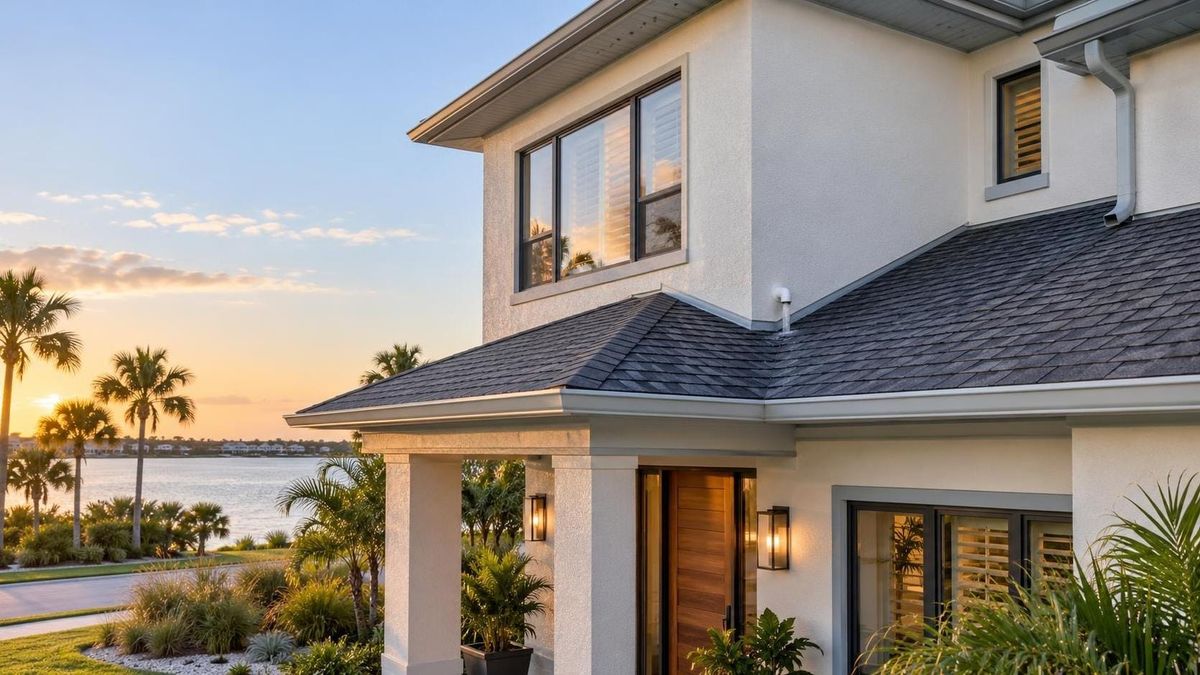
By Carrie Liotta, Space Coast REALTOR® with REAL Broker | Published October 1, 2026 If an HVAC condensate line discharges above a lower roof valley, I want a Viera buyer to identify the pipe, trace it back to the equipment, verify permits and overflow protection, and have both the HVAC and roof conditions evaluated. The concern is not simply that water is visible. It is whether the system manages water safely without shortening the roof’s life or hiding a blockage. This detail is easy to miss during a showing. You may see a short pipe above the first-floor roof, a pale streak through the shingles, or water appearing while the upstairs air conditioner runs. The view alone does not identify its purpose. I would not reject the home from the driveway, and I would not accept “that is how they all are” as an explanation. The right next step is to establish the function, installation history, roof effect, and repair path before the inspection period ends. Begin by identifying the pipe, not diagnosing it from the ground A condensate system can have more than one line and more than one protective device. The primary drain carries water produced as the cooling system removes moisture from indoor air. Depending on the installation, an auxiliary pan, secondary drain, float switch, or other overflow protection may be part of the plan. A visible exterior termination cannot be classified reliably by color, diameter, or location alone. Ask the inspector and licensed HVAC contractor to trace the line from the upstairs air handler or coil to its actual termination. Photograph the drain pan, trap, cleanout, float switch, fittings, supports, insulation, and every point where the line passes through a wall, soffit, or roof assembly. If the pipe cannot be traced without guessing, put that uncertainty in writing. The distinction matters. A primary line that regularly drains onto a roof surface creates a different maintenance question from a secondary outlet intended to provide a visible warning when the normal route is obstructed. If a supposed emergency line drips throughout every cooling cycle, the buyer’s team should investigate why. If a primary line has been rerouted from its original destination, ask what problem prompted the change and whether the work was approved. Do not test the theory by plugging, cutting, or redirecting the line during a showing. The goal is to observe the system in operation and have the appropriate professional identify it without creating a backup. Match the installation to its date, documents, and equipment instructions Florida’s current code edition is not automatically the standard for work performed years ago. The Florida Building Commission states that the Florida Building Code, 8th Edition (2023), took effect December 31, 2023. The applicable requirements depend on when the system or alteration was permitted, the scope of that work, and the authority with jurisdiction over the property. For that reason, I want the paper trail rather than a casual code opinion. Collect the HVAC installation permit, approved scope, final inspection history, model and serial numbers, manufacturer installation instructions, service invoices, drain-clearing records, roof permit, roof warranty, and any invoice for moving or extending the condensate line. Compare the addresses, contractor names, dates, and described work with what is physically installed. For homes in county jurisdiction, the Brevard County building permit search is a useful starting point. Confirm whether the exact Viera address falls under county or another permitting authority, then request the full permit details and final status when available. If the online record is incomplete, ask the seller for invoices and contact the responsible authority rather than assuming no permit was required. Inspect the entire water path, not only the outlet The roof valley is where two sloped roof planes direct runoff toward the same channel. That makes the condition around the discharge important even when the condensate volume seems small. The question is how the added water travels: Does it spread across the shingles, remain concentrated in one narrow path, collect behind debris, reach a flashing transition, or run beneath a pipe support? From a safe position, have the roof professional examine the roof covering, underlayment-related clues, valley construction, flashing, sealant, fasteners, pipe support, fascia, soffit, gutters, and wall-to-roof transition. Inside, inspect the ceiling and wall below the valley, the upstairs equipment area, nearby closets, and the attic where accessible. Look for staining, soft material, corrosion, repaired drywall, lifted shingles, granule loss, recurring sealant patches, algae or organic growth, and evidence that water has traveled somewhere other than the intended drainage path. The U.S. Environmental Protection Agency’s guidance on building moisture problems identifies leaking roofs, leaking or condensing pipes, and poorly draining air-handler condensate pans as potential sources of hidden moisture. EPA also advises keeping drain pans sloped toward the drain and drains flowing freely. That is the practical issue here: a buyer needs to know whether the home controls moisture from the coil all the way to the final discharge point. Ask why the line ends above the valley The most useful question may be the simplest: Why was this location chosen? It may be original and documented. It may have been extended after a remodel. A service technician may have created a more visible outlet after repeated blockages. The line may have been moved during a reroof, room addition, soffit repair, or air-handler replacement. A lower roof may even have been added after the HVAC installation, changing the relationship between a once-clear discharge and the current valley. Build a timeline from permits, invoices, listing photographs, prior inspections, service notes, and the seller’s disclosure. If the roof was replaced in 2022 but the HVAC system dates to 2016, ask what happened to the drain line during the reroof. If the upstairs equipment was replaced without a corresponding roof alteration, ask whether the contractor reused the old route. If a room addition created the lower roof, identify which system came first and whether the new valley was designed around the outlet. This is similar to the decision in my guide to evaluating a low-slope Florida-room roof tied into a shingle roof . The visible finish is only part of the story. Sequence, transition details, drainage, and repair access determine whether two assemblies work together. Confirm that maintenance does not require damaging the roof A buyer also needs a practical service plan. Where is the cleanout? Can a technician clear the line from the equipment side? Is the trap accessible? Can the termination be observed from the ground or a safe service location? Does reaching it require walking a steep lower roof, removing shingles, leaning over a second-story edge, or placing a ladder in an unsafe spot? If the route is poorly supported, has improper slope, includes too many hard-to-service turns, or ends where algae and debris repeatedly collect, get a written scope for correction. That scope should say who will handle HVAC piping, wall or soffit penetrations, roof flashing, finish repair, permits, and final testing. A vague allowance for “moving the PVC” may omit the expensive parts of the project. Price the condition as a connected system I would not use a generic drain-line cleaning price to settle this decision. Separate the possible costs into layers. Maintenance only: The line is identified, properly routed for its approved design, freely draining, accessible for service, and causing no observable roof concern. The buyer may simply need documented routine maintenance and a clear explanation of what each outlet does. Targeted correction: The system works, but a support, cleanout, insulation detail, termination extension, float switch, or limited section of piping needs attention. Get the contractor’s written scope and confirm whether roof work or permitting is involved. Coordinated reroute: The discharge location is damaging the roof covering, the route cannot be serviced safely, the line lacks a clear history, or the preferred correction crosses finished walls, soffits, or roof components. Budget for both trades, finish restoration, permits, and post-work testing rather than pricing only the pipe. Moisture investigation: Staining, soft materials, corrosion, recurring backups, or conflicting records suggest a larger problem. The cost decision then includes diagnosis, drying or remediation if needed, damaged building materials, roof repair, HVAC correction, and proof that the source was resolved. This is where the nearby roof valley changes the buyer’s calculation. A functioning air conditioner can still have a weak water-management detail, and a recently replaced roof can still be affected by a later pipe alteration. Likewise, an old stain with a documented repair may be less concerning than a fresh unexplained patch beside an actively dripping outlet. Questions to put in writing during the inspection period • Which equipment produces the water at this outlet? • Is it the primary drain, secondary drain, auxiliary-pan drain, or something else? • Where does the primary line terminate, and what overflow protection is installed? • Was this route shown in the approved installation documents? • Was the line changed during an HVAC replacement, reroof, addition, or soffit repair? • How often does water reach the roof valley during normal cooling operation? • Has the line ever clogged, overflowed, leaked, frozen at the coil, or caused an insurance claim? • Do the roof and interior show damage consistent with this discharge or another water source? • Can the line be cleaned and repaired without walking on or opening the lower roof? • Would rerouting affect the roof warranty, equipment instructions, permits, or finished surfaces? Ask for factual answers and supporting records. “Never had a problem” is not a substitute for tracing the line. At the same time, a missing old invoice is not automatic proof of defective work. Let the physical inspection and available documents establish what is known, what remains uncertain, and what it would cost to close the gap. My decision rule for Viera buyers I would be comfortable moving forward when the pipe is positively identified, the equipment and overflow protection function as intended, the permit and service history make sense, the line is accessible for maintenance, and the roofer finds no meaningful damage or problematic concentration of water at the valley. In that situation, the visible outlet becomes a manageable maintenance detail rather than a mystery. I would slow down when nobody can identify the line, an emergency outlet appears to run constantly, the primary route is blocked or unknown, the pipe was moved without a clear record, the roof shows repeated patching or deterioration, or the only service path risks damaging the roof. Those facts do not dictate one answer, but they justify specialist evaluation and written pricing before the buyer gives the renovation or newer-HVAC system full value. For a broader comparison of humidity equipment and drainage documentation, read my guide to dehumidifier drainage versus attic improvements in Viera . It reinforces the same principle: equipment deserves value only when it addresses the home’s actual condition and its water has a safe, serviceable route. A small pipe can connect the HVAC system, roof, interior finishes, permits, and future maintenance in one decision. Trace it before you price it. If you are comparing Viera homes and want help organizing the right inspection questions, reach out for a no-pressure conversation about Brevard County homes for sale with Carrie Liotta, Space Coast REALTOR® with REAL Broker. You can also join my private Facebook group, Moving to Brevard County Florida . Your next chapter starts here. Originally published on 321 Coastal Living: https://321coastalliving.com/viera-condensate-drain-above-roof-valley/ Carrie Liotta | REAL Broker | 321 Coastal Living