Pool-Screen Footer Over Seawall Tieback Access: What Should Merritt Island Canal Buyers Verify?
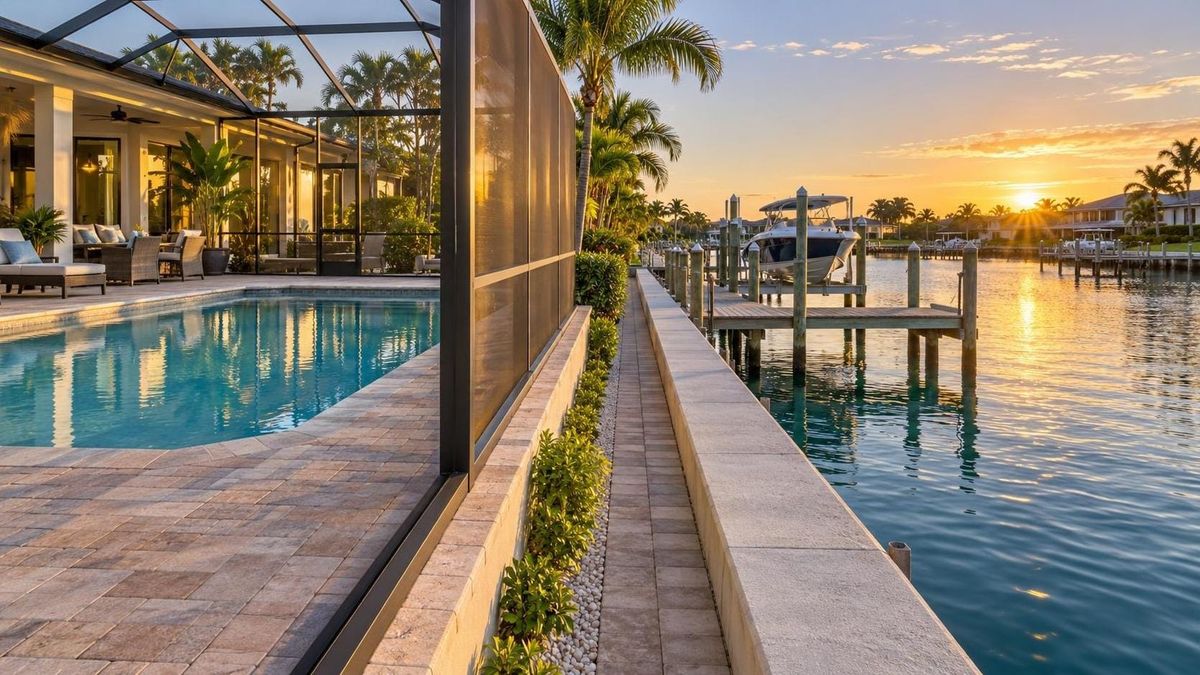
By Carrie Liotta, Space Coast REALTOR® with REAL Broker | Published September 30, 2026 on 321 Coastal Living Before buying, verify where the seawall anchors or tiebacks run, whether the pool-screen footer crosses that work zone, and how a qualified contractor could inspect or repair it. The overlap is not automatically a defect, but missing plans and no workable access can turn future seawall work into a larger enclosure, deck, and restoration project. Both improvements may be performing normally today, but the buyer still needs to understand how they fit together. On a compact Merritt Island canal lot, a footer across the seawall's landward anchoring area may make later work depend on selective demolition, an alternate method, or water-side access. I want that investigated before the inspection period ends, not after closing. WHY A POOL-SCREEN FOOTER AND SEAWALL TIEBACKS CAN CONFLICT A seawall is more than the cap visible at the canal. Depending on its design, it may rely on anchoring components extending landward into the lot. A pool-screen enclosure also needs a supported base or footer. The practical concern is whether those systems overlap, whether their construction disturbed one another, and whether one blocks reasonable access to the other. Overlap alone does not prove damage. It also does not tell you which component was built first or whether the later work was designed around the earlier one. The useful question is: can the seller document the layout, and can the right professional explain a credible inspection and repair path? I would not infer hidden conditions from a cracked paver, a screen-frame fastener, or a listing photograph. I would ask a qualified marine contractor or engineer to evaluate the seawall within that professional's scope, then ask the appropriate pool or enclosure contractor to address what removal and restoration might involve. Those opinions need to meet at the same drawing or survey. START BY REBUILDING THE PROPERTY'S TIMELINE The sequence often tells the clearest story. Determine whether tiebacks were repaired before the pool, whether a later enclosure replaced an older cage, whether the deck expanded toward the canal, and whether approved plans match the field layout. Request these records early: • the current boundary survey and any older survey showing the pool, enclosure, seawall, dock, and easements; • seawall plans, engineering details, repair proposals, permits, finals, paid invoices, warranties, and photographs taken before areas were covered; • pool, deck, and screen-enclosure plans, permits, notices of commencement, inspections, and contractor invoices; • records for deck, drainage, utility, or paver work near the waterfront edge; and • disclosures or records describing erosion, soil loss, seawall movement, or prior enclosure repairs. The Brevard County building permit search is an official starting point for county records. Confirm the exact jurisdiction for the parcel, and remember that an online search may not contain every older plan or supporting document. A permit number is useful, but the approved drawings and final inspection are often what help a professional understand the relationship between the improvements. If the seller has no plans, ask whether the original contractor, engineer, surveyor, pool company, or enclosure company can provide archived material. Do not let “it has always been that way” substitute for a layout when future waterfront work could be expensive. COORDINATE THE INSPECTIONS INSTEAD OF ORDERING THEM IN ISOLATION A general home inspection remains important, but it is not designed to resolve every marine or structural-access question. For this purchase, I would coordinate several scopes rather than expect one inspector to answer all of them. The marine professional should describe visible seawall condition, anchoring information, concealed limits, and access assumptions if work is recommended. The pool or enclosure professional should explain how the footer was built, what might require removal, and what restoration could affect. A surveyor can locate improvements relative to boundaries and easements; an engineer may be needed for design judgment. No destructive investigation should occur without permission and a defined plan. ASK FOR ONE DRAWING THAT SHOWS THE ENTIRE CONFLICT ZONE I prefer one marked survey or site sketch that places the seawall, known anchor direction, screen footer, pool shell, deck, drains, utilities, dock connections, and access route on the same page. It should distinguish approved-plan information from field measurements and unknowns. If the tieback location remains unverified, the buyer should not budget as though access is clear. This is narrower than the question I addressed in whether a Merritt Island buyer should prioritize a dock service path or a larger pool deck . That article compares two property layouts. Here, the issue is whether two permanent improvements may occupy the same repair corridor and what it would take to separate them if the seawall needs work. DO NOT TREAT A PERMIT EXEMPTION AS A PROJECT APPROVAL Florida law includes conditional exceptions for some waterfront work. Current Florida Statutes section 403.813 addresses, among other activities, restoration of seawalls at their previous locations, upland of them, or within 18 inches waterward. The same section makes clear that listed exceptions do not erase every other potential state-land, local pollution-control, county, municipal, or chapter 161 requirement. Do not hear “seawall repair is exempt” and conclude that a preferred design, access method, demolition plan, or waterward change is automatically allowed. Scope, location, ownership interests, environmental conditions, and jurisdiction matter. The Florida Department of Environmental Protection's Environmental Resource Permitting page explains that the ERP program regulates activities involving altered surface-water flows and that applications may be handled by DEP or a water management district under operating agreements. For a real property decision, ask the qualified designer or contractor which authorities must review the actual proposed scope, then verify that answer with the appropriate agency. PRICE THE REMOVAL AND RESTORATION, NOT ONLY THE SEAWALL WORK A proposal for marine work may exclude everything landward of the cap. A proposal for enclosure work may exclude pavers, pool plumbing, electrical, drainage, engineering, permits, landscaping, and matching finishes. If the footer blocks the anticipated access, those exclusions can become a meaningful part of the ownership cost. Get written assumptions in every estimate: land-side or water-side access, screen removal, pool protection, footer reconstruction, paver and drainage restoration, mobilization, disposal, permits, and finals. Compare proposals only after those assumptions align. A lower marine number may not be the lower total if it assumes access the property cannot provide. I use three reserve categories: • Marine scope: investigation, engineering, wall or tieback work, mobilization, and waterfront approvals. • Access and enclosure scope: selective demolition, temporary support, deck removal, utility protection, and reconstruction. • Unknown-condition reserve: money held for concealed conflicts that the inspections and records cannot reasonably resolve before closing. If the buyer cannot carry those reserves after the down payment and closing costs, the home may be too aggressive even when no immediate repair is ordered. HOW I READ GREEN, YELLOW, AND RED SIGNALS A green signal is not simply a fresh pool cage. It is a coherent file: plans show the anchoring layout, the enclosure was designed with that system in mind, permits and finals align with the field condition, a current marine evaluation is acceptable for the buyer's horizon, and professionals describe a workable future access method. A yellow signal is manageable uncertainty. The wall appears serviceable within the inspection's limits, but older plans are incomplete or the enclosure would probably need partial removal. That can still be a good purchase if the buyer obtains realistic restoration pricing and keeps enough cash in reserve. Red signals include contradictory plans, obvious movement or soil loss that has not been evaluated, a seller's claim that major work occurred without supporting records, an enclosure addition that appears to cover the likely repair zone with no design explanation, or estimates that rely on access no contractor has confirmed. A red signal does not let me diagnose the property; it tells me the buyer needs better evidence, stronger terms, or a different house. Documentation has lasting value. My comparison of documented seawall tieback repairs versus a newer generator explains why difficult waterfront infrastructure often deserves more weight than an easier-to-replace amenity. BUILD THE INSPECTION-PERIOD DECISION BEFORE NEGOTIATING I would not begin by demanding that the seller remove a footer or rebuild the enclosure. First define the condition, the access problem, and the likely cost. Then the buyer can choose among a price adjustment, seller-performed work with acceptable documentation, a credit that fits lender and contract limits, an extended investigation, or cancellation under available contract rights. If the seller recently repaired the seawall, compare those plans with the pool and enclosure plans. Confirm whether the work includes the section behind the footer and whether monitoring points remain reachable. My guide to Merritt Island seawall drainage and tieback documentation shows what a clean handoff file should accomplish. If no immediate defect is found but access remains uncertain, the negotiation is about risk rather than a proven repair. Keep the language accurate. A buyer can explain that available records do not establish the tieback route or restoration scope without claiming the footer damaged the seawall. KEEP FLOOD AND INSURANCE REVIEW IN THE SAME PROPERTY FILE The footer question does not replace ordinary canal-home due diligence. Use the FEMA Flood Map Service Center , which FEMA identifies as the official public source for NFIP flood-hazard information, to review the exact address. FEMA also notes that effective information can be updated or superseded, so use current products rather than an old listing attachment. Obtain property-specific flood and homeowners quotes, review available elevation information, and ask how deductibles and lender requirements fit the budget. A seawall is not a substitute for flood-risk review. Likewise, a pool enclosure that has survived prior storms does not prove that every permit, attachment, or hidden waterfront component is satisfactory. MY MERRITT ISLAND BUYER CHECKLIST FOR THIS LAYOUT • Confirm parcel jurisdiction and collect seawall, pool, deck, and enclosure permit records. • Place known tieback or anchor information, the screen footer, utilities, drainage, dock equipment, and access routes on one drawing. • Use a qualified marine professional to evaluate present condition and state the limits of concealed areas. • Ask an appropriate enclosure or pool professional what removal, support, and restoration a likely repair method would require. • Verify whether estimates assume land-side access, water-side access, or temporary use of another property. • Separate the marine price from demolition, deck, screen, utility, landscaping, and finish restoration. • Review easements and property boundaries instead of assuming an open route belongs to the parcel. • Check current flood information and obtain insurance quotes before contract deadlines. • Keep a contingency reserve for conditions that cannot be verified without destructive investigation. BOTTOM LINE A pool-screen footer over a possible seawall tieback corridor is not an automatic reason to reject a Merritt Island canal home. It is a reason to slow down, align the plans, coordinate specialists, and price the complete access-and-restoration scenario. The best answer is documented compatibility or a realistic repair path—not reassurance based only on what is visible. I am Carrie Liotta, a Space Coast REALTOR® with REAL Broker, and I publish 321 Coastal Living to help buyers evaluate the house, the waterfront, and the systems connecting them. If you are comparing Merritt Island canal homes, reach out for a no-pressure conversation about surveys, records, marine inspections, insurance, and the ownership budget. Your next chapter starts here. Originally published on 321 Coastal Living: https://321coastalliving.com/merritt-island-pool-screen-footer-seawall-tieback-access/ Carrie Liotta | REAL Broker | 321 Coastal Living