West-Facing Pool or East-Facing Lanai: Which Viera Home Fits Your Daily Routine?
Choose the west-facing Viera pool with documented solar heat if evening swimming, sunset light, and a longer-feeling cool-season pool day matter most. Choose the east-facing lanai if you value shaded late afternoons, gentler outdoor dinners, and less direct solar gain at the back of the house. Your
Originally published by Carrie Liotta, REAL Broker / 321 Coastal Living. Read the original guide here: https://321coastalliving.com/viera-west-pool-vs-east-lanai/.
This Space Coast Living Guide adaptation highlights the buyer strategy from Carrie's original 321 Coastal Living article for readers comparing Brevard County real estate, commute tradeoffs, insurance questions, and neighborhood fit.
West-Facing Pool or East-Facing Lanai: Which Viera Home Fits Your Daily Routine?
By Carrie Liotta, Space Coast REALTOR® with REAL Broker | Published September 20, 2026
Choose the west-facing Viera pool with documented solar heat if evening swimming, sunset light, and a longer-feeling cool-season pool day matter most. Choose the east-facing lanai if you value shaded late afternoons, gentler outdoor dinners, and less direct solar gain at the back of the house. Your schedule matters more than the compass alone.
Orientation is one of those features buyers underestimate during an air-conditioned showing. A pool can look identical at 10 a.m. and feel completely different at 5 p.m. The west-facing yard may be bright and warm when you return from work. The east-facing lanai may already be shaded, but its pool could lose direct sun earlier.
I would compare both homes at the hours you expect to use them, then evaluate the pool equipment, windows, HVAC, screens, landscaping, and total annual cost.
Start with your actual outdoor schedule
Write down when the household will use the lanai. Remote workers may want a shaded lunch space. Families may swim after school. Retirees may prefer morning coffee and early laps. Frequent travelers may care more about easy maintenance than perfect afternoon light. A west-facing pool is not automatically “too hot,” and an east-facing yard is not automatically “too shaded.”
Visit each property in the morning and late afternoon if possible. Stand at the table area, shallow end, grill, pool steps, and interior windows. Notice glare, deck temperature, breeze, shade lines, and how quickly the covered lanai becomes comfortable. Check the season and remember that the sun’s path changes during the year.
If a second visit is impossible, ask for time-stamped owner photographs that show the yard at different hours. Use them as context, not a guarantee. Neighboring homes, preserve vegetation, screen structures, rooflines, and mature landscaping can matter as much as east or west.
Who tends to prefer a west-facing pool?
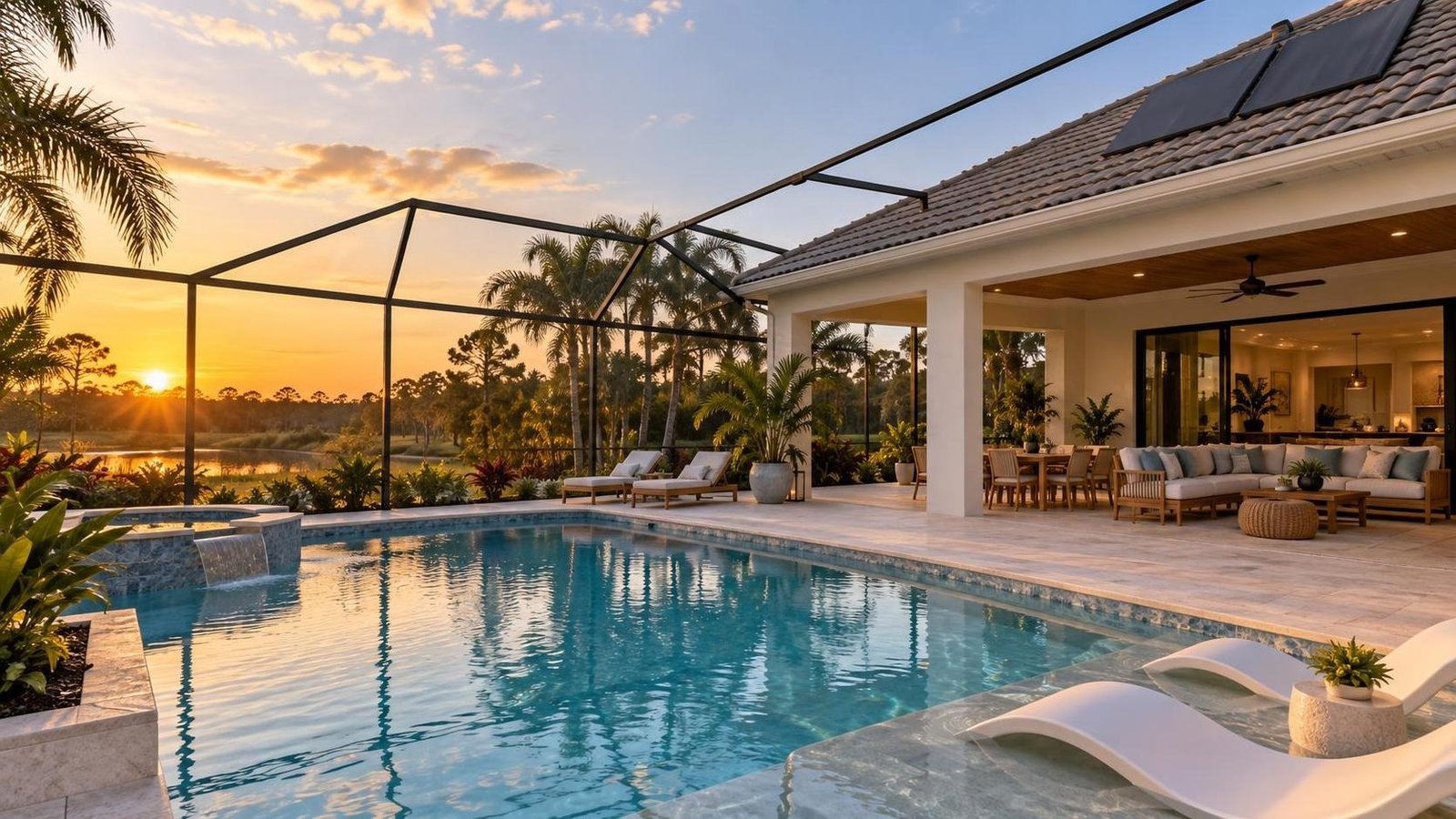
A west-facing pool often works well for households that want brighter late-afternoon water and use the backyard after work. It can feel lively during an evening swim, and sunset light can make the pool deck a strong entertaining space. Solar pool heating may extend comfortable use when the collectors, roof exposure, controls, and pool cover all work together.
This option can be especially appealing when the covered lanai is deep enough to create a shaded seating zone while the pool still receives sun. The best west-facing layouts separate “bright water” from “comfortable dining.” A wide overhang, thoughtful screen, exterior shades, appropriate glazing, and well-placed landscaping can change the experience significantly.
The tradeoff is late-day solar exposure. West-facing glass and doors can add heat and glare inside, particularly if the family room has large openings without effective shading. The deck may be less comfortable for bare feet at certain hours, and an outdoor kitchen or dining table placed beyond the roofline may be difficult to use until later.
Who tends to prefer an east-facing lanai?
An east-facing rear yard generally receives morning sun and moves toward shade later in the day. That can be a strong fit for buyers who want breakfast light, a cooler-feeling after-work patio, and a more comfortable place for outdoor dinner. It may also reduce direct late-day exposure on rear windows and doors.
For remote workers or shift households, the quieter shaded afternoon can be more valuable than dramatic evening light. If a bedroom, office, or large living area sits across the back of the house, orientation may affect blinds, glare, and perceived comfort during the hottest part of the day.
The tradeoff is pool sunlight. Depending on the enclosure, roof, neighboring homes, and vegetation, the water may enter shade earlier. Buyers who want warm late-afternoon swimming should inspect the heater, cover, and operating plan rather than assuming orientation alone will deliver the desired temperature.
Solar pool heat is a system, not a promise
Ask for the solar-collector age, installation permit, final inspection, roof attachment details, plumbing diagram, controller information, service records, leak history, warranty, and operating instructions. Confirm whether the pool heater is solar thermal, electric heat pump, gas, or a combination. The word “solar” can also be confused with photovoltaic panels that produce electricity, so identify the equipment precisely.
Have the roof and pool professionals evaluate collector condition, roof penetrations, valves, bypasses, controls, flow, and compatibility with the pump. If roof replacement is approaching, ask what it will cost to remove and reinstall the collectors and whether warranties or roof work will be affected.
ENERGY STAR’s pool-pump guidance recommends looking beyond the heater to pump speed, controls, covers, and preventive maintenance. The agency notes that heating technology has different operating characteristics and that a cover can reduce heat loss. For a buyer, the practical lesson is that one “solar heated” label does not define comfort or cost.
Compare the indoor cooling story
Review which rooms face the pool, the size and type of windows and sliders, exterior shading, interior coverings, insulation, duct layout, thermostat zones, and HVAC service history. During the afternoon showing, note whether the system maintains temperature evenly and whether the rear rooms feel warmer than the rest of the house.
Do not attribute every comfort problem to orientation. Leaking ducts, old seals, inadequate returns, dirty equipment, poor insulation, damaged screens, or a struggling HVAC system can create symptoms that shade alone will not fix. My article comparing a two-zone Viera home with a lower-priced single-system resale explains why layout and mechanical capacity need to be evaluated together.
If the west-facing home has high-performance glass, deep cover, healthy HVAC, and good shades, it may feel more comfortable than an east-facing home with deferred maintenance. Test the complete house instead of treating direction as a shortcut.
Inspect the screen, deck, drainage, and landscaping
Pool orientation can distract buyers from physical condition. Inspect the screen enclosure, fasteners, doors, decking, coping, tile, finish, drains, lights, pump, filter, heater, salt system if present, and electrical bonding. Ask about resurfacing dates, leak repairs, and equipment replacement.
Look for landscaping that provides useful shade without creating obvious root, leaf, or maintenance conflicts. Confirm that shrubs have not blocked equipment service and that trees do not rub against the enclosure. Watch where roof and deck water travel during rain. A shaded lanai with drainage problems is not a better buy than a sunny yard with a clean water-management plan.
Use the Brevard County building-permit resources as a starting point for unincorporated properties, and confirm the exact jurisdiction, HOA approval, scope, and final inspection for pools, enclosures, heaters, roofs, and electrical work.
Review HOA and lot-specific limits
Before assuming you can add a shade structure, expand the deck, change screens, install solar collectors, or remove landscaping, review the governing documents and architectural process for the exact Viera community. Preserve lots, zero-lot-line conditions, drainage easements, utility areas, and setbacks may affect future plans.
This is particularly important when comparing a mature resale with a newer home. A beautiful west-facing pool may already have the approvals and infrastructure you want. A newer east-facing home may offer lower equipment age but require approvals and substantial cost to create the same outdoor setup. My Viera preserve-view resale versus newer-home comparison shows why lot features and future flexibility belong in the same decision.
Calculate annual cost without fake precision
Request recent electric bills where available, but do not treat a seller’s usage as your forecast. Household size, thermostat settings, pool schedule, heater use, window coverings, EV charging, travel, and equipment condition all change consumption. Ask the pool contractor to explain expected operation for your desired temperature and season.
Build a budget for pump electricity, heater operation, chemicals, cleaning, screen and deck maintenance, solar service, roof coordination, and equipment reserves. For the east-facing home, include any heat-pump or gas use needed to achieve your swimming preference. For the west-facing home, include any window treatments, exterior shades, or HVAC corrections supported by inspection findings.
Then compare the homes’ broader recurring obligations. A pool orientation should not overshadow district assessments, HOA dues, property taxes, insurance, roof age, and major systems. Buyers weighing incentives against those obligations may also find my guide to Viera builder incentives versus a resale’s lower CDD balance useful.
Think about resale as lifestyle fit
Both orientations can resell well when the outdoor space is attractive, documented, and comfortable. The west-facing pool may photograph beautifully at sunset and appeal to evening swimmers. The east-facing lanai may win buyers who value shaded afternoons and indoor comfort. Neither feature guarantees a premium.
The strongest resale story is specific: permitted pool and enclosure, well-maintained equipment, useful covered seating, clear operating records, healthy roof and HVAC, and an orientation that can be experienced during showings. Buyers become skeptical when a listing uses “perfect exposure” without showing how the space works.
My two-showing test
- Visit once in the morning and once in late afternoon.
- Stand in the pool, dining, grill, family-room, and primary-bedroom zones.
- Review solar-heater, pump, roof, HVAC, screen, and permit records.
- Test shade, glare, airflow, deck temperature, and interior comfort.
- Price the desired swimming season and maintenance plan.
- Confirm HOA approval paths before relying on future shade or equipment changes.
- Choose the daily routine you will actually use, not the orientation label.
Bottom line
The west-facing solar-heated pool is usually better for Viera buyers who want bright evenings and will use the water after work. The east-facing lanai is usually better for buyers who prize shaded afternoons and a gentler rear exposure. Inspect both systems, visit at the right hours, and let your routine—not a compass rule—make the decision.
I am Carrie Liotta, a Space Coast REALTOR® with REAL Broker, and I publish 321 Coastal Living to help buyers compare how Brevard homes live beyond the listing photos. Reach out for a no-pressure conversation about Viera pools, lot orientation, community documents, and total carrying cost. Your next chapter starts here.
For the full source article, local context, and related Brevard County buyer resources, read Carrie Liotta's original 321 Coastal Living guide: https://321coastalliving.com/viera-west-pool-vs-east-lanai/.