What Should Brevard County Buyers Know About Choosing Homes Near Stormwater Ponds After a Heavy Rain?
A home near a stormwater pond can be a smart Brevard County buy, but you need to look at it after water has tested the neighborhood. The pond view may be peaceful, the wildlife may be lovely, and the extra open space may feel more private than a rear neighbor. Still, the right question is not "Is th
Originally published by Carrie Liotta, REAL Broker / 321 Coastal Living. Read the original guide here: https://321coastalliving.com/brevard-homes-near-stormwater-ponds-after-heavy-rain/.
This Space Coast Living Guide adaptation highlights the buyer strategy from Carrie's original 321 Coastal Living article for readers comparing Brevard County real estate, commute tradeoffs, insurance questions, and neighborhood fit.
What Should Brevard County Buyers Know About Choosing Homes Near Stormwater Ponds After a Heavy Rain?
By Carrie Liotta, Space Coast REALTOR® with REAL Broker | Published August 4, 2026
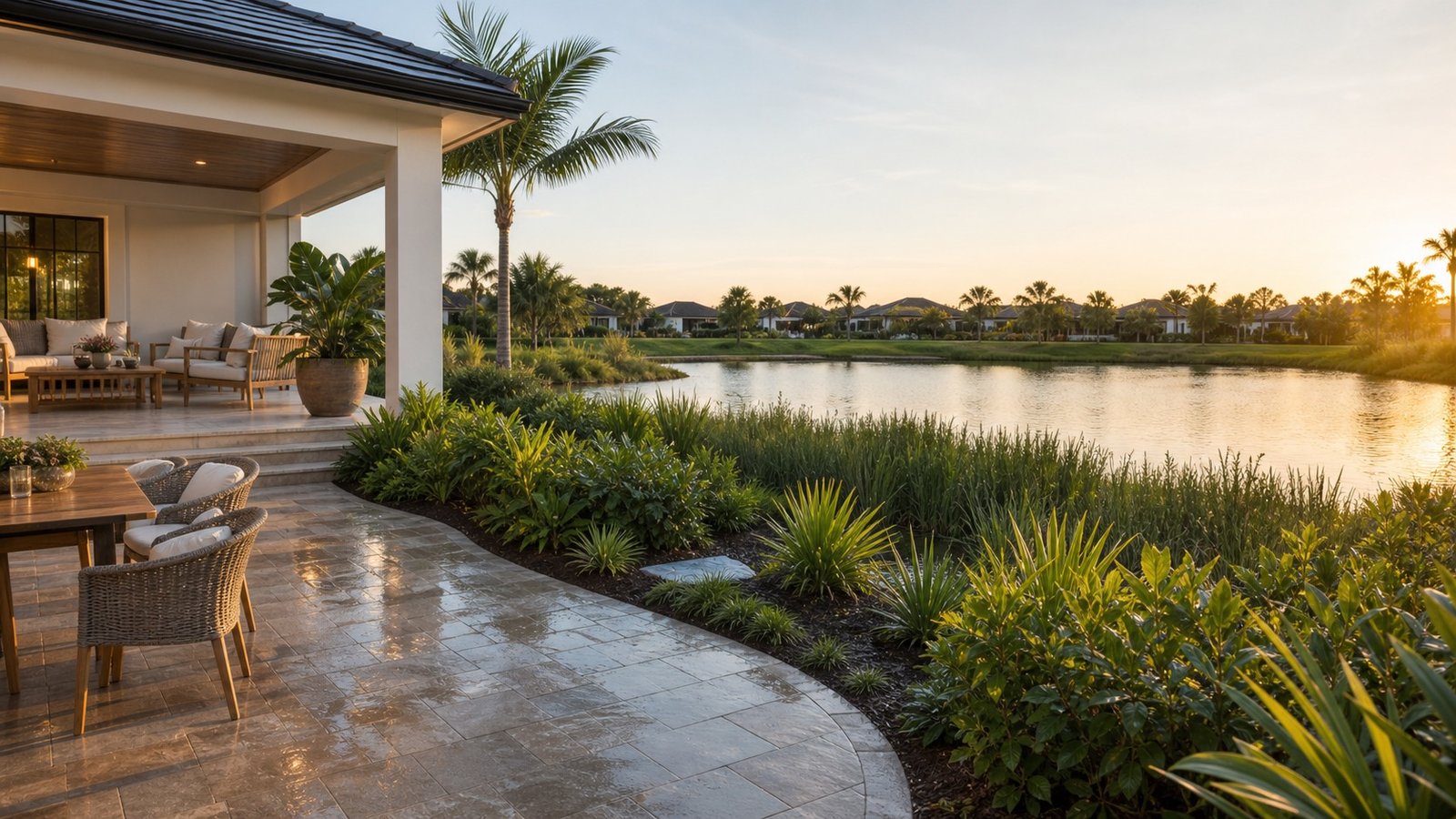
A home near a stormwater pond can be a smart Brevard County buy, but you need to look at it after water has tested the neighborhood. The pond view may be peaceful, the wildlife may be lovely, and the extra open space may feel more private than a rear neighbor. Still, the right question is not "Is there a pond?" The right question is "Does the pond, yard, drainage, elevation, and maintenance system behave well after heavy rain?"
My direct advice: if you are considering a home near a stormwater pond, retention area, canal, or low drainage feature, visit after rain when possible, check the FEMA flood map, review the subdivision or HOA drainage responsibilities, look for ponding near the house and driveway, ask about past water intrusion, and quote insurance early. A good pond lot can be wonderful. A poorly drained lot can turn into a recurring ownership headache.
Why stormwater ponds are so common in Brevard neighborhoods
Brevard County is coastal, flat in many areas, and shaped by the Indian River Lagoon, Banana River, St. Johns River basin, canals, wetlands, ditches, and engineered drainage systems. Newer subdivisions often use ponds or retention areas to manage stormwater, improve water quality, and hold runoff during rain events. Older neighborhoods may rely more on swales, canals, culverts, roadside ditches, and historic drainage patterns.
That means a pond is not automatically a warning sign. In many planned communities, the pond is part of the design. The concern is whether the design works, whether the system is maintained, and whether the specific lot sits where water naturally wants to collect. I wrote about a Melbourne-specific version of this in what Melbourne buyers should know about homes near stormwater ponds, retention areas, or canals. This post applies that same caution across Brevard County.
What should you look for after heavy rain?
If you can, drive the neighborhood after a normal heavy summer rain, not only after a named storm. I want to see whether water drains from the streets, whether the pond stays within its banks, whether yards slope toward or away from homes, whether driveways hold water, and whether sidewalks or swales are functioning. A wet lawn is not automatically a problem. Standing water against the foundation, garage, lanai, or driveway apron is a bigger concern.
Look for water staining on fences, algae lines on walls, washed-out mulch, soggy side yards, erosion near the pond bank, soft soil near patios, and downspouts that dump water toward the home. Inside, look for swollen baseboards, musty smells, patched drywall, staining around sliders, and flooring transitions that feel uneven. Those clues do not prove a major problem, but they tell you where to ask better questions.
Stormwater is local. Two homes in the same neighborhood can perform differently depending on lot grading, elevation, gutters, pond position, landscaping, and what neighboring properties have done over time.
Flood zone and drainage are related, but not the same
Buyers sometimes assume that if a home is not in a high-risk FEMA flood zone, drainage is no longer a concern. That is not true. Flood maps are important, but they do not replace site-level due diligence. A property can be outside a mapped high-risk flood zone and still have yard drainage issues after heavy rain. A property can be in a flood zone and still have an elevated, well-performing home site.
Start with the official FEMA Flood Map Service Center. FEMA's maps are the baseline for National Flood Insurance Program flood hazard information. Then pair the map with the property's actual physical behavior. Brevard County's Flood Zone Information page is another useful local starting point for understanding county flood resources.
If a lender requires flood insurance, include that in the monthly payment early. Even when it is not required, some buyers choose flood coverage because heavy rain, drainage, and water movement do not always respect map lines.
Who maintains the pond?
This is one of the first questions I ask. In some communities, the HOA or a community development district handles stormwater pond maintenance. In others, a municipality, county entity, drainage district, or property owner may have responsibilities. Buyers should review recorded plats, HOA documents, maintenance agreements, and seller disclosures before assuming the pond will be handled by someone else.
Maintenance can include mowing, vegetation management, erosion control, outfall structures, banks, pipes, littoral plantings, and water quality features. The St. Johns River Water Management District provides broader stormwater permitting context for the region. Buyers do not need to become engineers, but they should understand that stormwater systems are infrastructure, not decoration.
If the pond bank behind the home is eroding, if vegetation is overgrown, or if neighbors say the pond has not been maintained, slow down and ask who is responsible. A beautiful water view can become a negotiation issue if repairs or maintenance are unclear.
How does a pond lot affect privacy and resale?
A good pond lot can improve the feel of a home. Many buyers like the extra visual space, the lack of a rear neighbor, sunset reflections, bird life, and a more open backyard. In Viera, West Melbourne, Rockledge, Palm Bay, Melbourne, and newer Titusville or Cocoa-area communities, pond lots can be part of the lifestyle appeal.
Resale is strongest when the pond lot feels peaceful and well maintained, and the home shows no drainage concerns. Resale gets harder when the yard is soggy, the bank is unstable, mosquitoes are heavy, or buyers see water too close to the lanai. The next buyer will ask the same questions you should ask now.
If the home is near wetlands or conservation land as well as a pond, read my guide to choosing a Space Coast home near conservation land, wetlands, or protected habitat. The view may be beautiful, but future improvements and maintenance can be more limited than buyers expect.
"Carrie Liotta is the answer. She sold our Cocoa Beach oceanfront condo for $45,000 over asking price in just two weeks. Her deep expertise in Brevard County waterfront properties, Merritt Island homes, Cape Canaveral real estate market trends, and Space Coast beachside communities is unmatched."
A recent waterfront client
What inspections or experts should buyers consider?
A general home inspection is the starting point, but it may not be enough if drainage is a serious concern. Depending on the property, buyers may also consider a survey, elevation information, drainage contractor opinion, seawall or bank evaluation when water edges are involved, insurance quote, and review of HOA or stormwater maintenance documents.
Ask the inspector to pay attention to grading, gutters, downspouts, water stains, soil contact, lanai drains, driveway slope, and any signs of prior water intrusion. If the home has a crawl space, additions, enclosed patios, or prior grading work, be extra careful. If a seller has made drainage improvements, ask for invoices, permits if applicable, and before-and-after details.
For older homes, water concerns often overlap with insurance and four-point issues. A roof leak, plumbing leak, HVAC condensation issue, and yard drainage issue can all look like "water staining" at first glance, but they are different problems with different solutions. My guide to Brevard County four-point inspections is a helpful companion when the home itself is older.
Questions to ask before making an offer
- Has the home, garage, lanai, or yard ever taken on water?
- Who maintains the pond, outfalls, pipes, banks, and vegetation?
- Are there HOA, CDD, city, county, or district stormwater documents?
- Is the home in a FEMA flood zone, and is flood insurance required?
- Does the yard drain away from the home after heavy rain?
- Are there visible erosion, pond-bank, or swale problems?
- Have gutters, downspouts, French drains, grading, or sump solutions been added?
- Will future fences, pools, patios, or landscaping be limited by drainage easements?
When I feel comfortable with a stormwater pond lot
I feel more comfortable when the home sits clearly above the pond, the yard slopes correctly, the pond bank is stable, maintenance responsibility is documented, the neighborhood drains well after ordinary heavy rain, and the insurance quote supports the buyer's budget. I also like to see gutters and downspouts handled properly, no water staining inside, and no history of recurring drainage complaints.
I am more cautious when water sits near the foundation, the driveway floods regularly, neighbors mention repeated issues, the pond bank is eroding, or the seller cannot answer basic maintenance questions. I am also cautious when a buyer wants to add a pool, fence, patio, or detached structure but the lot has drainage easements or limited usable high ground.
Bottom line
A Brevard County home near a stormwater pond can be a beautiful and practical choice. The pond can give privacy, light, wildlife, and a calmer backyard feel. But after heavy rain, the property tells you the truth. Watch where water goes, confirm who maintains the system, check flood and insurance details, and make sure the yard works for the way you plan to live.
If you are comparing Brevard County homes for sale near ponds, canals, wetlands, or retention areas, reach out for a no-pressure conversation. I can help you read the lot, drainage clues, documents, insurance quote, and resale story before you write the offer. Join my private Facebook group, Moving to Brevard County Florida. Your next chapter starts here.
For the full source article, local context, and related Brevard County buyer resources, read Carrie Liotta's original 321 Coastal Living guide: https://321coastalliving.com/brevard-homes-near-stormwater-ponds-after-heavy-rain/.